___

BONUS FREEBIE: Your message deserves the media’s attention. So how do you get out there in a bigger way? I’ve got you covered. CLICK HERE to grab my free “Checklist to Become a Go-To Media Expert.”

___

A lot of authors go to conferences to pitch their books. But I hear a lot from my media training clients that they’re not quite sure how to prepare. 

Often, pitching at a conference is like speed dating. You only get a couple of minutes and you really want to make a good impression. 

Here’s how to prepare to make the most of pitching your book at a conference. 

1) Use the Accordion Method to figure out your “book hook.”

The idea here is to prepare something between a media pitch and a soundbite. The Accordion Method is a tool I developed for speaking in the media in soundbites. You come up with a short, medium, and long answer to the questions you think you’ll be asked. The same method works for talking about your book.  

You want to come up with a short, medium, and long version of the pitch you’re giving at the conference. Each version of your pitch should focus on the “book hook” that makes your book unique and attractive to readers. 

2) Walk the walk (and talk the talk).

First impressions matter. So it’s important that you come across as friendly, confident, and knowledgeable. A professional appearance and manner goes a long way with establishing a good first impression.

Here’s a quick primer: 

  • Bring layers (you never know what the temperature will be!) and clothing that travels well. If you need a steamer, pack one!
  • Set yourself up to feel good throughout the day with a water bottle, breath mints, and granola bars
  • Don’t forget business cards! (People trade those again.) 

For a complete guide, my blogs about speaking at a conference and attending a conference go over how to make sure you’re fully prepared — from what to wear to what to pack. 

Tip: If the conference is virtual, most of the same rules apply — but tailored to a video call. Make sure your audio words and set up a professional and simple background (no blurred backdrop, please!). Here are all my tips for creating a home video studio for meetings and recordings. 

3) Practice (but don’t memorize a speech).

Practice really does make perfect. Go over your notes enough times that you feel like you can hit the key points without speaking verbatim from a memorized speech. Recording yourself and listening back can help too. Even if it’s just on audio. Hearing yourself say the words outloud is very important. Reporters and anchors do this before they shoot any videos to fully prepare. The goal is to come across as ready and natural. And the more times you practice, the easier it is to get into that flow.

And don’t forget to quit the “ums” and “likes” and get right to the point! Those filler words take up precious time that you can’t spare. 

It’s okay to have notes, but you don’t want to be reading from a page. And that’s because you should always…

4) Make eye contact.

This seems like such a small thing, but it’s actually huge. People will feel an instant connection when you look them in the eye. Eye contact is powerful and it can make the difference between someone remembering your pitch and getting lost in the crowd.

This holds true even if it’s a virtual conference. Look right into the camera (not at yourself!) because that will come across as eye contact on a video call. 

For even more tips on how to talk about your book, check out my training Media Ready Author.

5) Learn from those who have done it before.

I loved reading this story in Writer’s Digest from Julia Bogart, an author who successfully pitched at a conference. Turns out we share the same agent! Rita is my agent for Listful Thinking and Listful Living. 

Julia wrote:

I entered the room and made a beeline for the agent who topped my list: Rita Rosenkranz. I stood in line repeating my pitch to myself silently. Each person in front of me made their pitch and walked away without Rita’s business card. Finally, it was my turn—I drew a deep breath. I approached her desk. Rita wore those glasses that slip down your nose and she held a firm line for a mouth. I began—my pitch came forth as I had practiced it. As I neared the end, I watched Rita crack the slightest smile. She held out a card and said, ‘Send me your book outline.’”

You can read Julia’s whole story to learn how she prepped and landed an agent at the Writer’s Digest Conference Pitch Slam. 

___

BONUS FREEBIE: I have a resource for you that will help you prepare to talk with media and audiences. It’s the 10 Questions Every Author Needs to Answer. You can grab the fiction and nonfiction lists here.

___

___

BONUS FREEBIE: I have a resource for you that will help you prepare to talk with media and audiences. It’s the 10 Questions Every Author Needs to Answer. You can grab the fiction and nonfiction lists here.

___

One of the most common misconceptions about the media is that they’ll come to you. And they might… so you should be ready. But actually, the opposite is true. As an author or expect, you have to tell the media who you are. 

How can you do that?

Read more

___

BONUS FREEBIE: I have a resource for you that will help you prepare to talk with media and audiences. It’s the 10 Questions Every Author Needs to Answer. You can grab the fiction and nonfiction lists here.

___
Whether it’s a podcast interview, a TV appearance, or a feature in a print publication, authors need the media to connect with readers. The media is how people find you and your writing.

Read more

___

BONUS FREEBIE: I have a resource for you that will help you prepare to talk with media and audiences. It’s the 10 Questions Every Author Needs to Answer. You can grab the fiction and nonfiction lists here.

___

Interviewing yourself on camera is a hack for authors and experts that I recommend to clients all the time — because I do it myself! When it comes to sharing your expertise, self-interviewing can be a game changer. It’s one of the most efficient and effective ways to get your message out clearly and on your own terms.

Read more

___

BONUS FREEBIE: You’re preparing to promote your book in the media but what questions do you need to have answers to? Click here to grab my free “10 Media Questions Every Author Needs to Answer.” There are questions for fiction and nonfiction authors!

___

As a television producer for over 20 years, I get asked a lot of questions about how to pitch media and what they’re looking for. During my career as a news producer I saw a lot of awesome pitches and even more that I deleted without a second look.

Now as a media trainer who works with authors to get and keep media attention, I’ve helped dozens of non-fiction and fiction writers to prepare for media opportunities. I even have a resource all about pitching — it’s called the Media Pitch Guide and you can get access right here. 

But it all goes back to pitching media and making sure you’re giving them what they want before you ever get interviewed. And for authors it makes a big difference when it comes to who will get booked on a show or podcast and who will not.

So let’s dive in to the Top 5 Media Pitch Questions I get from authors.

Read more

_

BONUS FREEBIE: Your message deserves the media’s attention. So how do you get out there in a bigger way? I’ve got you covered. CLICK HERE to grab my free “Checklist to Become a Go-To Media Expert.”

_

Everyone can benefit from taking a communication skills course. (Yes, even you!) Think about it — we’re communicating at work and at home every day. All day.

I was a television news producer for almost 20 years and my expertise is working with the media. When I work with authors and leaders one-on-one, we talk about how to look their best on camera, what to say, and I give them tips to make their own videos.

Sure, you can learn communication skills on your own, or you can learn from me in my popular LinkedIn Learning course, External Communication Skills for Leaders.

Read more

___
BONUS FREEBIE: Your message deserves the media’s attention. So how do you get out there in a bigger way? I’ve got you covered. CLICK HERE to grab my free “Checklist to Become a Go-To Media Expert.”
___

Panels are a great way to promote your book or expertise and connect with professionals in your industry or your audience. But it can be tricky to know how to start preparing for a panel, especially if the topic is not exactly in line with your usual talking points.

I’ve spoken on many panels as a media expert, author, and LinkedIn Learning Instructor.

And they’re always a rewarding experience because I do a set of things to get ready every time.

Here’s my list of things I do to prepare for a panel.

Read more

___
BONUS FREEBIE: Your message deserves the media’s attention. So how do you get out there in a bigger way? I’ve got you covered. CLICK HERE to grab my free “Checklist to Become a Go-To Media Expert.”
___

A book launch is a lot of work. There’s speaking engagements, there’s events, there’s media and so much more. It can be exciting and exhausting to prepare.

I learned so much from writing and launching Listful Thinking and Listful Living. And from keeping the book in the media long afterwards. (My first book came out almost a decade ago and I’m still talking about it in the media!)

And I love sharing my knowledge with authors to get them ready for their big launches. In fact, I just lead a group training called Media-Ready Author to help authors get ready to launch their books in the media.  You can check out the replay here.

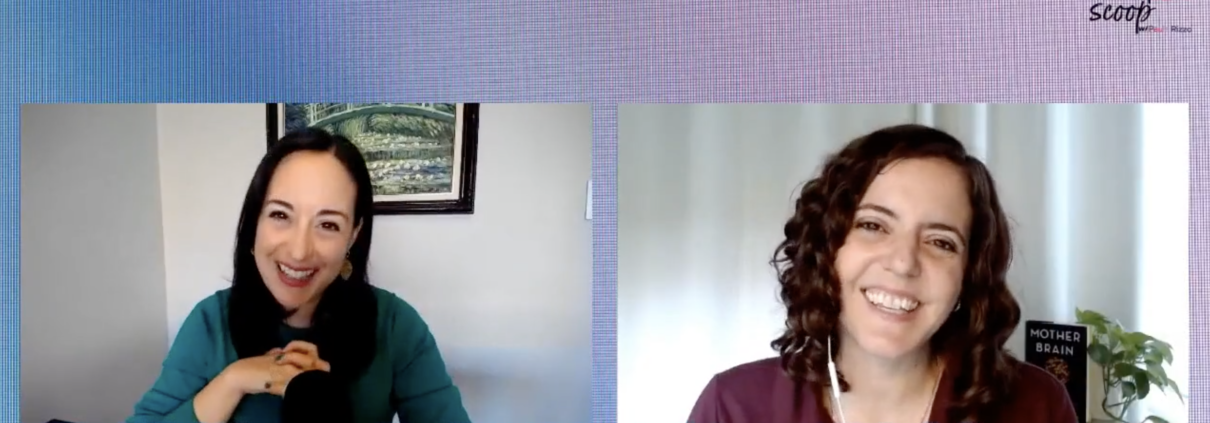
On a recent episode of Inside Scoop I brought one of my media-training clients, Chelsea Conaboy, on to share her experience launching her new book, Mother Brain.

Here are three lessons Chelsea learned from the book-launch process.

Read more

___
BONUS FREEBIE: Your message deserves the media’s attention. So how do you get out there in a bigger way? I’ve got you covered. CLICK HERE to grab my free “Checklist to Become a Go-To Media Expert.”
___

There’s a difference between being an author and a bestselling author.

But what does that really mean? How many books do you have to sell to qualify? Is getting on the New York Times Bestseller List a realistic goal? Is there a secret to getting on that list?

Book marketing expert, Rob Eagar, joined me on Inside Scoop to answer those questions.

Rob has helped both fiction and non-fiction authors hit the New York Times Bestseller List, along with USA Today and The Wall Street Journal. He just had a client about 120 days ago, who was on all of those. And helped a book that was 23 years old finally become a New York Times Bestseller, after already being in print for over two decades.

Here are four of Rob’s pointers to sell more books.

Read more

___
BONUS FREEBIE: Your message deserves the media’s attention. So how do you get out there in a bigger way? I’ve got you covered. CLICK HERE to grab my free “Checklist to Become a Go-To Media Expert.”
___

Where the Crawdads Sing is one of my favorite books and it’s becoming a movie! It takes a team of people to create a bestselling book.

And one of the most important people on that team is your book editor! The editor of Delia Owen’s bestselling book is Tara Singh Carlson, who joined me on Inside Scoop.

Tara is an Executive Editor at G.P. Putnam’s Sons and has worked on The Light We Lost by Jill Santopolo (which was also a Reese Witherspoon Book Club pick), on The Family by Naomi Krupitsky (which was a Read with Jenna pick in November), We Must Be Brave also by France Liardet and many celebrated and bestselling authors.

Here are a few points from Tara about what editors do and how they can help your book become a bestseller.

Read more