
Preparing for Conferences As a Speaker

___
BONUS FREEBIE: I have a resource for you that will help you prepare to talk with media and audiences. It’s the 10 Questions Every Author Needs to Answer. You can grab the fiction and nonfiction lists here.
___
Whether you’re presenting at an in-person conference or leading a virtual workshop, the secret to a successful talk comes down to one thing: preparation.
I’ve learned this firsthand after speaking at events for years now. From in-person events like the Writer’s Digest Conference to virtual presentations at the Willamette Writers Conference, I’ve been giving talks about productivity and media training to audiences across the country.
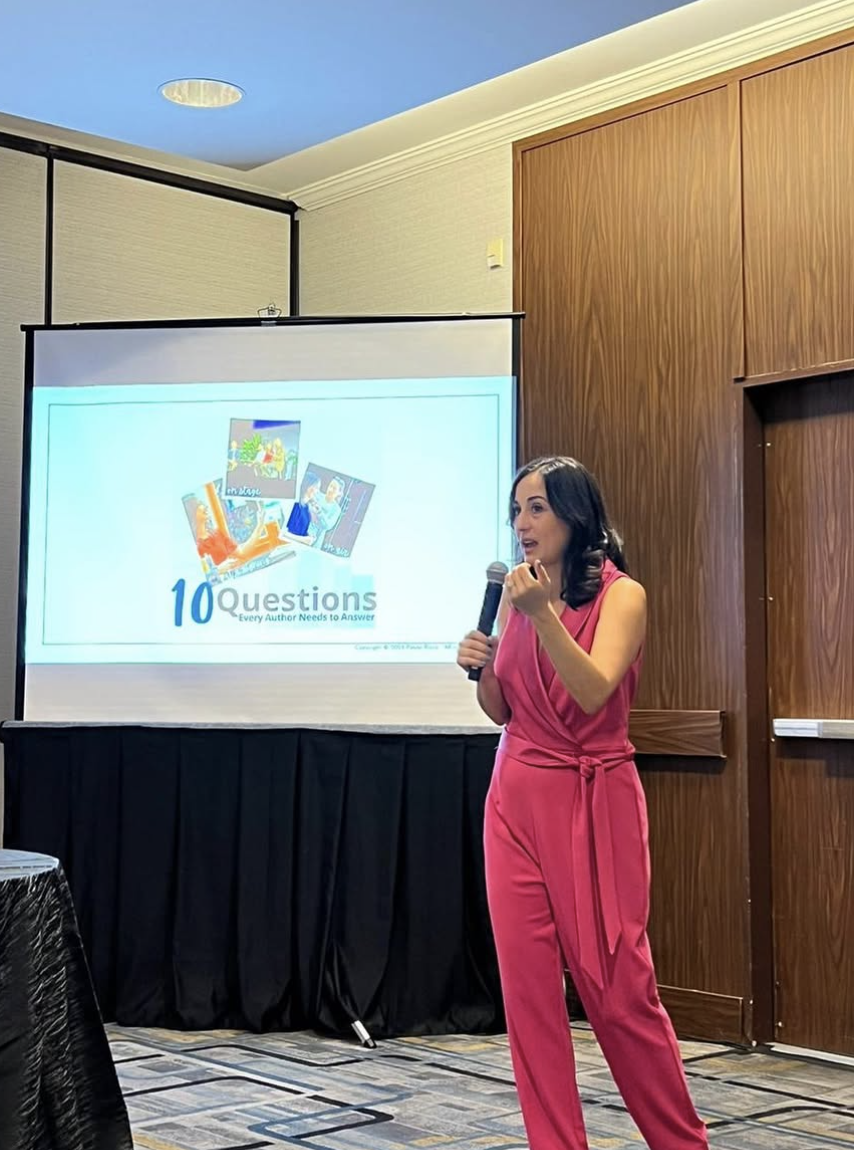
Here are my tips on what you need to do to prep. These checklists, tools, and mindset tips will help you come across as your best self.
1. Be intentional about in-person and virtual settings.
Your talk shouldn’t be one-size-fits-all. While your message can remain the same, the delivery should change depending on whether you’re in a room with people or connecting virtually.
In person, you should use fewer slides and focus more on storytelling and audience connection. Watch the room and adjust your pacing based on reactions (nods, eye contact, body language). Incorporate props or interactive moments to ground your presence in the room. This is a time to really be interactive if you want to be.
For a virtual presentation, use more slides — think of it like a TV news segment. Assume that people have a shorter attention span online and create a presentation that accounts for this. For example, add movement, transitions, and visually appealing slides.
Creating a presentation that you can edit and adapt for different presentations is key. You don’t want to start from scratch every time.
2. Work backwards and set goals for yourself.
You can’t wing it when it comes to speaking gigs. Or at least, you shouldn’t if you want to get asked back. You need to put in the work and prepare ahead of time. You’ll be so glad you did! When I prep for a speaking gig, I use an app called Asana (another option is Trello) to create a timeline and a list of tasks. Work backwards from the speaking date so you have plenty of time for everything that needs to be done.
Your timeline should include:
- Creating and editing slides
- Checking for typos
- Checking media licensing
- Testing videos and animations
- Running a dress rehearsal
3. Prioritize audience engagement and ongoing connections
You should always take full advantage of the opportunity by staying connected to your audience There are lots of ways to do this:
- Create a freebie (such as a PDF guide, checklist, or resource list) with a QR code or easy-to-remember link.
- Get conference approval for lead collection if needed.
- Add a slide with your slideshare.net link or website for further resources.
- Set up an email series that sends after the talk to keep the momentum going.
- Plan potential sales funnels and set up a relevant offer like a webinar, course, or strategy call.
4. Brush up on tech and logistical skills
It’s not just about the slides — it’s also about the stuff. Yep, doing a presentation requires some actual stuff to make sure things run smoothly.
For in-person talks:
- Bring adapters, dongles, and backup equipment.
- Label everything with your name and phone number (a label maker can be a real lifesaver).
- Create a packing list so you never forget a power cord again. You can keep using this list each time you get ready to present.
- Pack wrinkle-free clothing and check if your hotel has a steamer or iron.
- Bring printed notes just in case.
For virtual talks:
- Hardwire your internet — Wi-Fi is too risky.
- Test your camera, mic, and lighting in advance. Make sure to test this at the same time of day that your talk will be happening as natural light can change if you’re relying on it.
- Close tabs and clear your desktop before screen sharing.
- Turn off all notifications on your computer and around you
- Have a backup plan if your platform crashes (Zoom link, phone-in audio, etc.).
5. Put in the practice.
Before a presentation, it’s a good idea to do a full dress rehearsal. Yep: outfit, hair, makeup, everything. Sometimes you have to walk the walk a little before it feels natural.
Here’s another trick I use to get ready. I record audio of myself giving the talk. Then I listen to it. You can listen while you’re walking, driving, or doing chores — just like a podcast. Hearing yourself speak helps you internalize the material. This helps you keep your flow, even if you go off-script.
This method works especially well in settings where you want to appear more conversational and less scripted.
For virtual events practice transitions if you need to. Also – you don’t have to announce everything that you’re doing – like sharing your screen or taking a sip of water. Just do it.
6. Get in the right mindset.
Your mindset is just as important as your slides. Feeling calm and focused before you present is key. Before I begin a presentation, I always do a visualization exercise. Imagine yourself walking on stage (or logging in), connecting with the audience, and delivering your message clearly. This can really make a difference in your confidence!
If you still feel jittery, I suggest trying box breathing. Inhale for 4 seconds, hold for 4, exhale for 4, hold for 4. You can repeat as many times as you need.This calms your nervous system fast. Another strategy is to reframe your nerves and remember that it’s not about you — it’s about serving the audience.
7. Packing list tips
For in-person events where you’re traveling, you’ll want to make sure you have everything you need. Here’s a list to get you started:
- Laptop + charger
- HDMI & VGA adapters
- Clicker / presenter remote (Or download the app on your phone)
- Printed notes or outline
- Business cards
- Water bottle
- Clothing that travels well (and a backup outfit just in case!)
- Label maker (for last-minute tech labeling)
- Travel steamer or wrinkle-release spray
- Portable Speaker (I like to play music as people enter my in-person speaking sessions to lighten the mood and put people at ease)
Over the years, these are the strategies that have helped me be my best when I present. And it all comes down to the people you’re speaking to. They need to hear what you have to say and speaking is a public service. Keeping your audience in mind and doing the behind-the-scenes work will help you come across as confident, calm, and helpful.
___
BONUS FREEBIE: Your message deserves the media’s attention. So how do you get out there in a bigger way? I’ve got you covered. CLICK HERE to grab my free “Checklist to Become a Go-To Media Expert.”
___








Leave a Reply
Want to join the discussion?Feel free to contribute!