Tag Archive for: how to get media attention

___

BONUS FREEBIE: I have a resource for you that will help you prepare to talk with media and audiences. It’s the 10 Questions Every Author Needs to Answer. You can grab the fiction and nonfiction lists here.

___

Did you know podcasts have about 619 million listeners worldwide? Podcasts are a great way to connect with readers and grow your audience. Plus, podcasts will help you sell books more than any other platform if you’re an author. Pitching them takes a special approach that is uniquely tailored to this growing medium.

Here’s how to pitch podcasts:

Read more

___

BONUS FREEBIE: I have a resource for you that will help you prepare to talk with media and audiences. It’s the 10 Questions Every Author Needs to Answer. You can grab the fiction and nonfiction lists here.

___

So many people struggle with self-confidence about doing media. When I media-train authors and experts, I hear the same things over and over. People don’t feel ready. They don’t want to toot their own horn. They feel self-conscious about putting themselves out there. Doing media or creating videos can make you feel vulnerable. That’s a very common experience — because it’s true that when you speak to the public, you’re opening yourself up for judgement. But you’re also opening yourself up to changing lives through your expertise.

This is the golden rule of doing media: media is a public service. There are people who can really benefit from learning about the topic that you’re an expert on. They need to hear your message and read your book. Don’t keep it to yourself — tell the media who you are so you can connect with readers!

The first time you do media may be hard. That doesn’t mean you did something wrong or that you’re not qualified. It just means you tried something new and you’re still learning. That’s a good thing!

The important thing is that you’re stepping out of your comfort zone and sharing your knowledge, because that’s how you can help people. That’s your public service as an author. 

Here are three ways to help reframe media as a public service:

  1. Reflect on the impact books and authors have had on your life. 

Sometimes it’s helpful to go back to your own experience to get some perspective. What are your favorite books and authors? What have you learned from them and how have they changed your life?

Whether it’s a cookbook that taught you how to make healthy food for your family, a self-help book that got you through a tough time, or a novel that changed your viewpoint, chances are you’ve had some really impactful experiences with books.

Imagine if you’d never found those books — your life would probably be a lot less rich, fulfilling, and creative. That’s the power that books and authors bring to the public. That’s why doing media is a public service. It connects authors with the people who benefit from their work. 

  1. Reconnect with your “why.”

Why did you become an author? What made your want to share your ideas with the world through books? What drives your passion for writing books?

Thinking about these questions can help you reconnect with your “why.” Your “why” is the reason you do what you do — and it’s also the core of what you have to offer to readers. Doing media is how you share your expertise and creativity with people who will benefit from your knowledge.

  1. Imagine your readers — and speak to them. 

When you think about who will benefit from reading your book, who do you picture? Is it novice birdwatchers who are ready to learn more about their local flocks? Is it teens looking to escape into a magical sci-fi universe? Is it recent grads learning to cook for the first time? Really picture those people and think about the impact your book will have for them. 

Whether you write fiction or nonfiction, your book has an audience. These are the people whose lives will be tangibly improved by reading your book. Reframe doing media to think about them (not yourself). Doing media means connecting with your readers, and that’s a public service.

If you’re ready to level up your media prep as an author, I invite you to take my online course Elevate Your Platform. It’s  a strategic course designed to help authors and experts clarify their message and build a platform that supports media visibility, speaking opportunities, and book promotion. It’s ideal for authors who feel scattered or unsure how all their efforts fit together and want a clear, sustainable plan to grow their audience and visibility. You can grab your spot here. 

___

BONUS FREEBIE: Your message deserves the media’s attention. So how do you get out there in a bigger way? I’ve got you covered. CLICK HERE to grab my free “Checklist to Become a Go-To Media Expert.”

___

___

BONUS FREEBIE: I have a resource for you that will help you prepare to talk with media and audiences. It’s the 10 Questions Every Author Needs to Answer. You can grab the fiction and nonfiction lists here.

___

A few months ago, I led the Media Pitch Lab, a course to help authors craft effective pitches. And I realized that a lot of fiction authors were struggling to come up with effective hooks. The solution? Thinking about the audience. When it comes to creating your own content as well as pitching the media, you need to be thinking about your audience and how you can offer something of value to them. 

Read more

___

BONUS FREEBIE: I have a resource for you that will help you prepare to talk with media and audiences. It’s the 10 Questions Every Author Needs to Answer. You can grab the fiction and nonfiction lists here.

___

I’m a media trainer.

That means I work with authors and experts to help them communicate their message to their audience.

Together, we work on defining a message and a narrative that will capture their audience’s attention. This helps authors get (and keep!) media attention and reach the people who need to hear what they have to say. 

Lots of people think media training and publicity are one and the same.

But the job of a publicist is distinct. As an author, it’s important to know the difference. Once you know what each one does, you can create a media plan that draws on the resources of both jobs. I’ve worked with publicists for years as a senior television producer when they would pitch their authors to me. And now as a media training we team up again so I can help get their authors ready for primetime interviews. 

Here are answers to some of the most common questions about media trainers and public:

Read more

___

BONUS FREEBIE: Your message deserves the media’s attention. So how do you get out there in a bigger way? I’ve got you covered. CLICK HERE to grab my free “Checklist to Become a Go-To Media Expert.”

___

If you’ve always wanted to be an author, your book launch will be one of the most exciting stages of the publishing process. Getting recognized for your work and connecting with your readers is so rewarding. 

When you’re launching a new book, all of your strategy is focused around your book –the newness of it and the content. But what happens when the launch wraps and your new book is no longer new?

This is the stage when I meet many of my media-training clients. They’ve had a successful launch and they want to keep the momentum going. 

I shared some of my best tips for authors dealing with this in my Writer’s Digest column. 

These are the same strategies I’ve used myself for years as an author of two books, Listful Thinking and Listful Living!

1. It’s not (just) about the book anymore.

When you’re in the book launch phase, you’re really invested in the book itself. That’s only natural. It should be the focus of attention at this point! But once your book is a few months old, you have to shift your focus and start to consider how your book can support you as an author and expert — not how you can support your book!

This does not mean you shouldn’t talk about your book. Of course you should! You just need to find new ways of framing and contextualizing how you talk about your book. The attention needs to be on how your knowledge (and by extension, your book) can solve problems or shift people’s mindsets. This is something I talk you through in my free resource, 10 Questions Every Author Needs to Answer. 

2. Keep in touch. 

The relationships you build with journalists, reporters, and producers are some of the best resources for you as you consider your post-launch strategy. Thank you notes (paper ones — yep!) go a long way in demonstrating your appreciation.

These really do make an impact on fostering positive relationships between you and members of the media! You can then leverage those relationships to pitch again from a new angle. 

___

___

3. Open yourself up. 

You might be wondering what exactly you should pitch — how can you use your book as a jumping-off point that inspires the next stage of your media strategy?

Well, here’s a little secret: everything you talk about doesn’t have to be in the book.

In fact, it can actually be counterproductive to limit yourself to only things you covered in your book. You are an expert on a topic that includes what you talk about in your book. You can absolutely pitch on related areas within your expertise that didn’t fit into your book — and you should! This is essential to any sustainable media strategy. 

For even more tips on how to keep media momentum going, you can check out my column in Writer’s Digest. 

___

BONUS FREEBIE: I have a resource for you that will help you prepare to talk with media and audiences. It’s the 10 Questions Every Author Needs to Answer. You can grab the fiction and nonfiction lists here.

___

_

BONUS FREEBIE: Your message deserves the media’s attention. So how do you get out there in a bigger way? I’ve got you covered. CLICK HERE to grab my free “Checklist to Become a Go-To Media Expert.”

_

Everyone can benefit from taking a communication skills course. (Yes, even you!) Think about it — we’re communicating at work and at home every day. All day.

I was a television news producer for almost 20 years and my expertise is working with the media. When I work with authors and leaders one-on-one, we talk about how to look their best on camera, what to say, and I give them tips to make their own videos.

Sure, you can learn communication skills on your own, or you can learn from me in my popular LinkedIn Learning course, External Communication Skills for Leaders.

Read more

___
BONUS FREEBIE: I have a resource for you that will help you prepare to talk with media and audiences. It’s the 10 Questions Every Author Needs to Answer. You can grab the fiction and nonfiction lists here.
___

What does every author want? To be published.

I know this myself as an author of two books about productivity, Listful Thinking, and Listful Living. And I’ve been hard at work on my first novel for a few years now! If you aren’t familiar with the industry, it can be a bit of a mystery to figure out how a book goes from a draft to sitting on the shelf at your local bookstore.

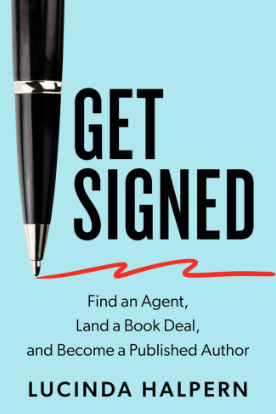
Since publishing a book is a bucket list item for so many, I invited my friend Lucinda Halpern, president and founder of Lucinda Literary, to share her knowledge. She represents authors writing in all areas, including health, business, lifestyle, narrative fiction, memoir, and more. She even wrote a book on the topic, Get Signed, with tons of insider info to help you find an agent and get your message out there.

Here are three points from our conversation that will help you think about getting published in a new way.

Read more

___
BONUS FREEBIE: Your message deserves the media’s attention. So how do you get out there in a bigger way? I’ve got you covered. CLICK HERE to grab my free “Checklist to Become a Go-To Media Expert.”
___

Launching a book is thrilling. Lots of time, energy and thought goes into planning it. But that’s not the only day you should be thinking about..

You’re going to have that book for a long time. So although launch day is important, the real question is: How do you keep the book in the minds and in the mouths of people all over the world for a long time?

It’s not an easy task. I know that from promoting my first two books Listful Thinking and Listful Living.

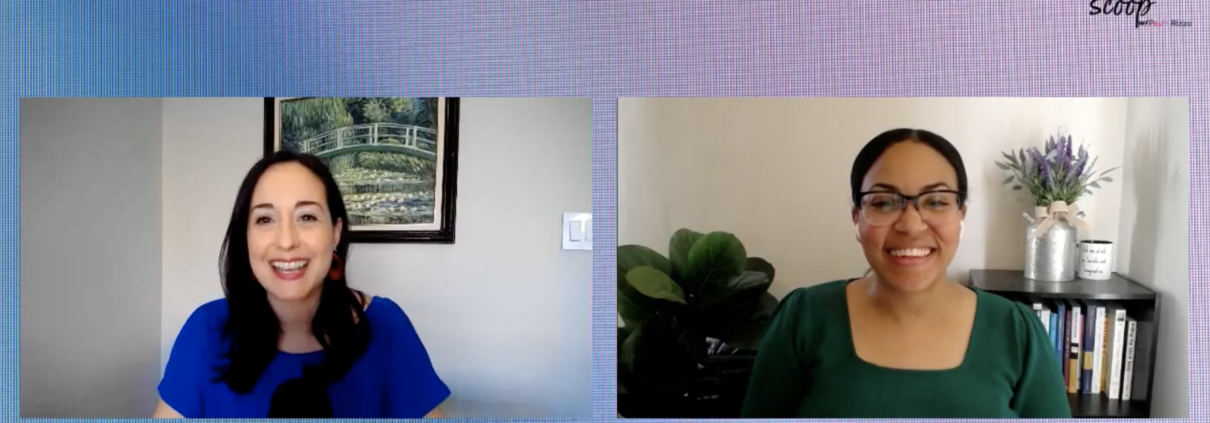
And my client, Krystale Littlejohn, knows all about this process as well. She’s the University of Washington’s Associate Professor of Sociology and author of the book Just Get on the Pill, which came out in August 2021  and is still getting lots of attention. We spoke on my live-streaming show Inside Scoop about her book launch process and how she was able to keep promoting her book over time.

Here are three great points from our conversation to help you promote your book.

Read more

___
BONUS FREEBIE: Your message deserves the media’s attention. So how do you get out there in a bigger way? I’ve got you covered. CLICK HERE to grab my free “Checklist to Become a Go-To Media Expert.”
___

You wrote a book. That’s a lot of work. But your work doesn’t stop when your book is finished. Now, you need to sell your book.

So you have to promote them! (I know all about this from my experience as a TV producer and being the author of Listful Thinking and Listful Living).

And there’s a tool authors can use to promote their books that is especially effective: TikTok.

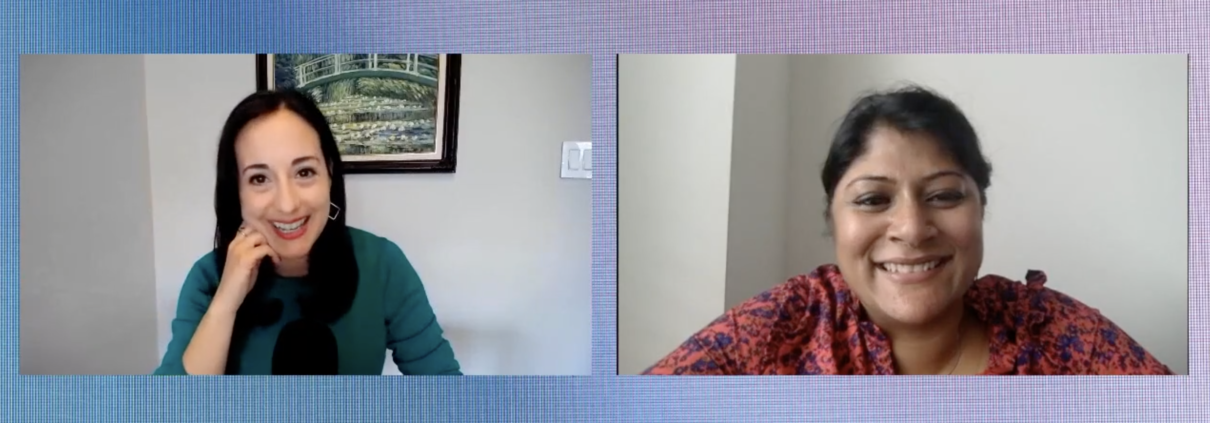
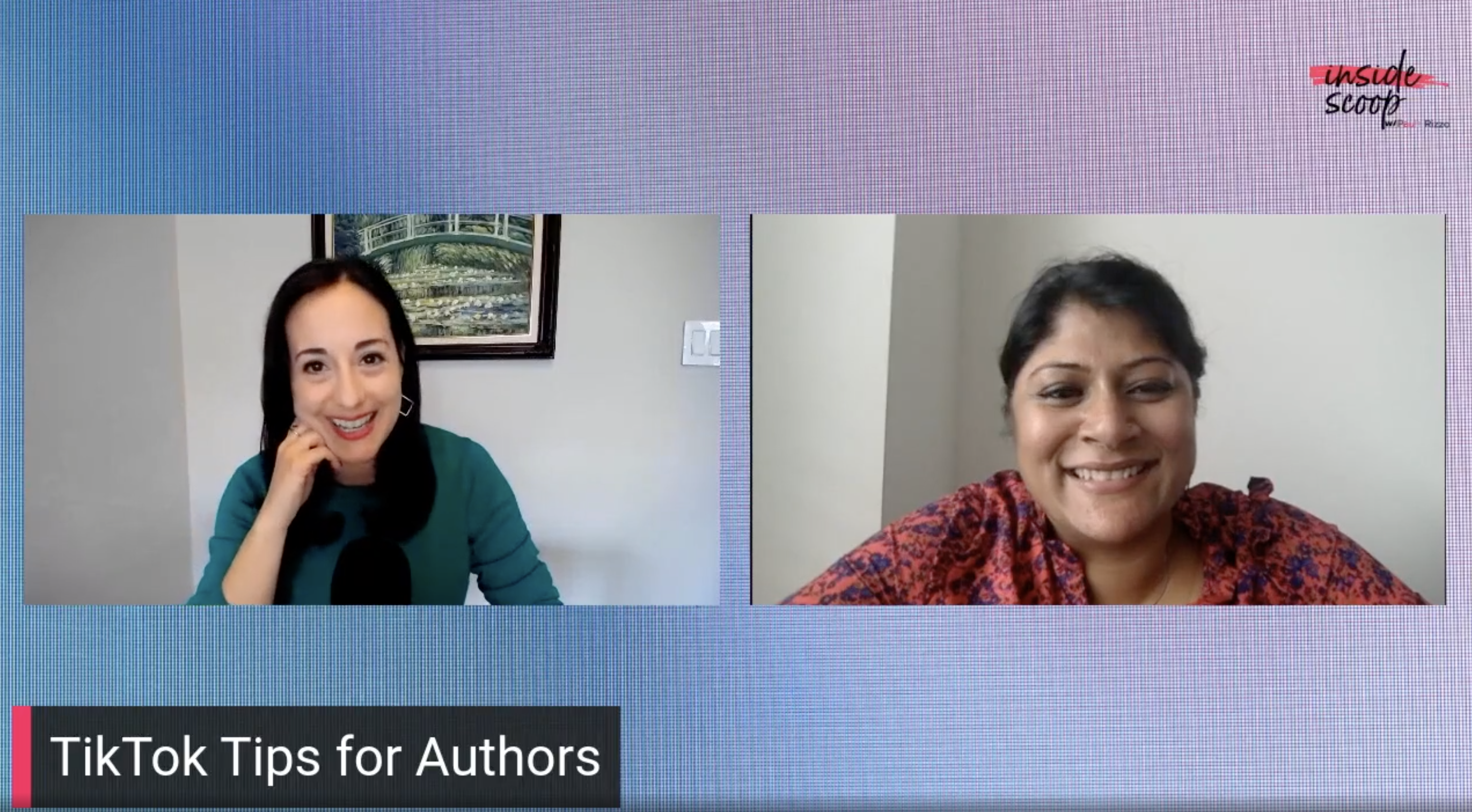
I spoke with publishing consultant, diverse kid lit reviewer, kids fiction podcaster and BookTok expert, Miral Sattar, on my live-streaming show Inside Scoop. She’s got a huge TikTok following and had a ton of great tips to share.

Here are Miral’s tips for understanding and using TikTok to promote your books.

___
___

1) Understanding TikTok.

You can’t use something to its full potential without knowing how it works right? Of course not. Understanding how TikTok works and how it’s different from other social media apps like Instagram is super important.

“When you first start using TikTok, it doesn’t matter how many followers you have. The app always shows your content to a small sample of people. And if enough people finish watching it, they show it to more people,” Miral said.

Because of this, every video on TikTok has a chance to go viral.
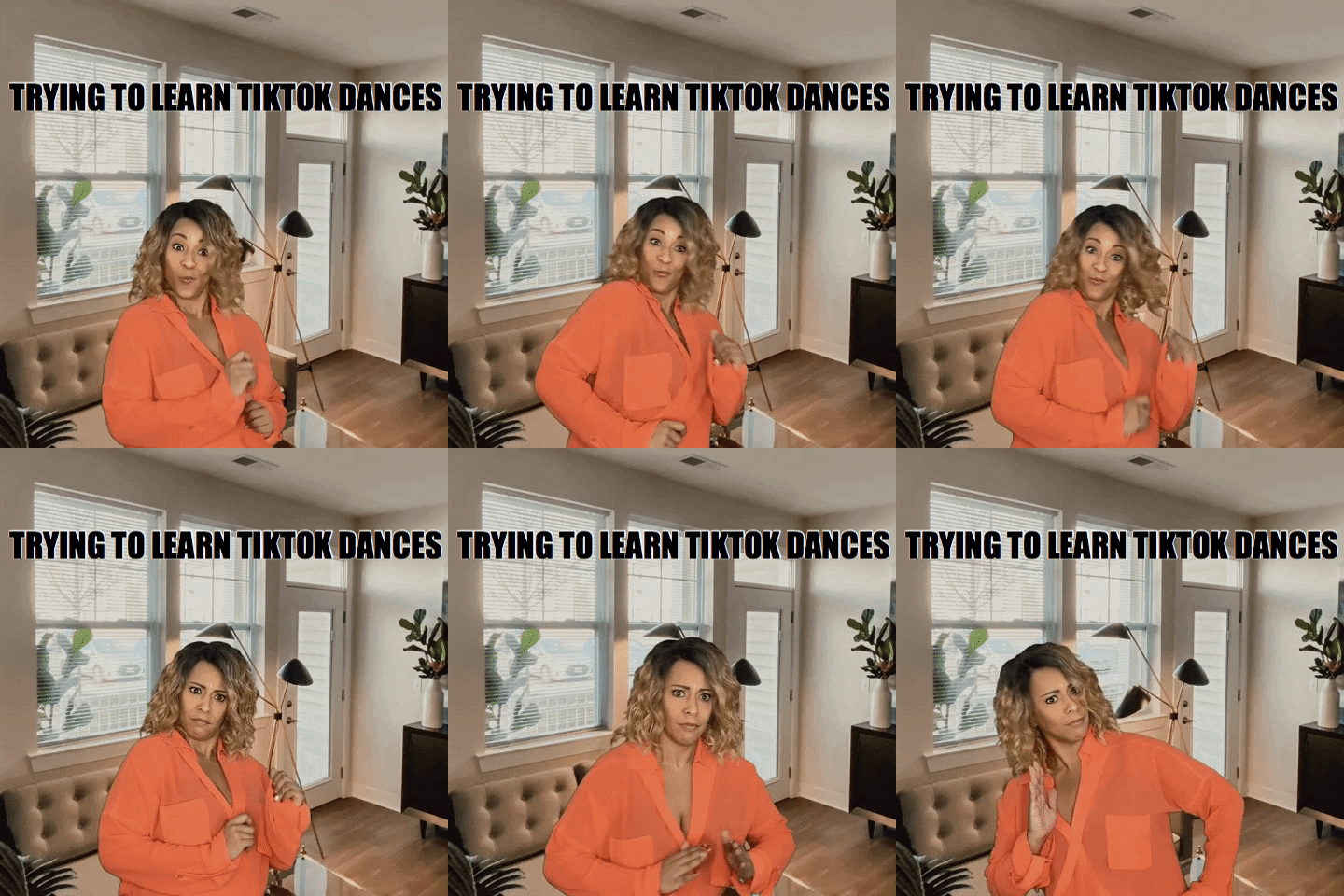
(Don’t worry. You don’t have to dance to go viral.)

“To hone in on your specific audience, there are things you can do to fine tune the algorithms based on what you post and what you watch,” Miral added.

And for authors, honing in on your audience means understanding #BookTok.

2) Using the power of #BookTok.

BookTok is kind of a subculture within TikTok where people make videos about books.

“When I first did a Tok in July, the hashtag had about 60 billion views. And I checked it right before we spoke today and the BookTok hashtag has 80 billion views right now,” Miral explained.

I’ve talked about how TV doesn’t sell books. I’ve seen it as a producer and experienced it as an author. It’s exciting to be on big TV shows like The Today Show, but it’s not great for sales. But BookTok is great for book sales.

For example, Colleen Hoover actually outsold the Bible.
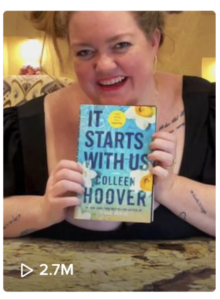
 

“Colleen Hoover has been around for a few years. She traditionally published multiple books. Maybe they did well, but they never did this well. Until she joined TikTok and made videos about her books.,” Miral added.

And it’s not just online sales. It’s impacting in-person bookstores as well.

“I take my kids to Barnes and Nobles all the time. And there’s a BookTok table. And 99% of the time, if it’s on the BookTok table, it’s good and I’ll pick it up,” she said.

Like podcasts, BookTok is an incredibly powerful tool, if you know how to use the hashtag.

___
___

3) Getting started on BookTok.

Now that you know how powerful BookTok can be for your book. Let’s talk about using it to promote your own content.

“In the beginning when I was doing my Toks, I would get ten views, 20 views. Because I was posting all the wrong things. I didn’t realize the algorithm needs to be trained. You train the algorithm to show you what you look at,” Miral said.

For example, if you start looking at non-fiction book related topics, that’s what TikTok will show you.

“Just start following readers there, engaging with authors, and then TikTok will start showing you that,” she added.

And then you can see techniques that do and do not work and adapt similar methods for your own content. Another great way to use TikTok to your advantage is using their analytics.

___
___

4) TikTok Video Tips.

Obviously, like any social media platform that uses video, you need to be comfortable on camera. But in addition to that, here are some tips to help your video creation.

“TikTok’s analytics tells you the best posting times, how many people watched your video. For me, I found the magic number was seven to nine seconds,” Miral said.

That’s not a lot of time to get your point across.

“A lot of people on TikTok will be like, ‘Hi, I’m me.’ Or ‘Hey guys, what’s going on?’ And then you’ve already lost them. You need to hook them in right away with an engaging picture or a question or something really interesting,” she explained.

And make sure to include a way for your audience to engage.

“You need to have a call-to-action. I put all the books I recommend in the comments. I pin it and say how to find it. For every podcast episode I’m promoting, I pin in the comments and include how to find it,” Miral said.

Here’s a successful example of one of Miral’s most popular videos that used all these tips.

“I joined TikTok to push out my fairy tales podcast for children, Bearily Bear, and also to promote inclusive children’s books. We imagine traditional fairy tales, rewritten for modern times,” she said.
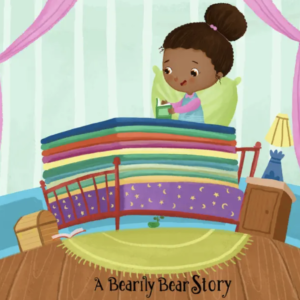
Miral’s podcast is free and can be found here. To check out more TikTok Tips for Authors, watch our entire conversation here.

___
BONUS FREEBIE: Your message deserves the media’s attention. So how do you get out there in a bigger way? I’ve got you covered. CLICK HERE to grab my free “Checklist to Become a Go-To Media Expert.”
___


___
BONUS FREEBIE: Your message deserves the media’s attention. So how do you get out there in a bigger way? I’ve got you covered. CLICK HERE to grab my free “Checklist to Become a Go-To Media Expert.”
___

There’s a difference between being an author and a bestselling author.

But what does that really mean? How many books do you have to sell to qualify? Is getting on the New York Times Bestseller List a realistic goal? Is there a secret to getting on that list?

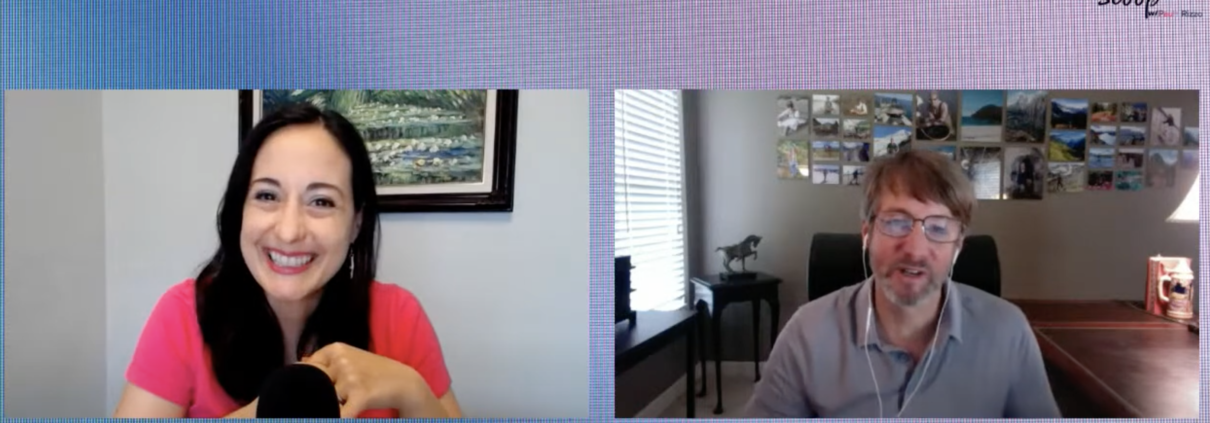
Book marketing expert, Rob Eagar, joined me on Inside Scoop to answer those questions.

Rob has helped both fiction and non-fiction authors hit the New York Times Bestseller List, along with USA Today and The Wall Street Journal. He just had a client about 120 days ago, who was on all of those. And helped a book that was 23 years old finally become a New York Times Bestseller, after already being in print for over two decades.

Here are four of Rob’s pointers to sell more books.

Read more